Most people don’t think much about their home’s water until it starts causing little problems. A glass might have an unusual taste. Soap seems harder to rinse away. White marks show up on the shower door, and somehow they return two days after you’ve cleaned them.
These things can be frustrating, but they also offer useful clues. Water quality isn’t the same everywhere, and the right treatment depends heavily on what’s actually present in the supply. Buying a filter because it worked for a friend may sound reasonable, but it can be a bit like taking someone else’s prescription for a problem you haven’t diagnosed.
A better approach is to understand your water first, then choose treatment that solves the problem without creating unnecessary complexity.
Start by Understanding the Water
Water can contain minerals, sediment, metals, microorganisms, disinfectants, and other substances. Some affect taste or appearance, while others can cause scale, staining, or problems with plumbing and appliances.
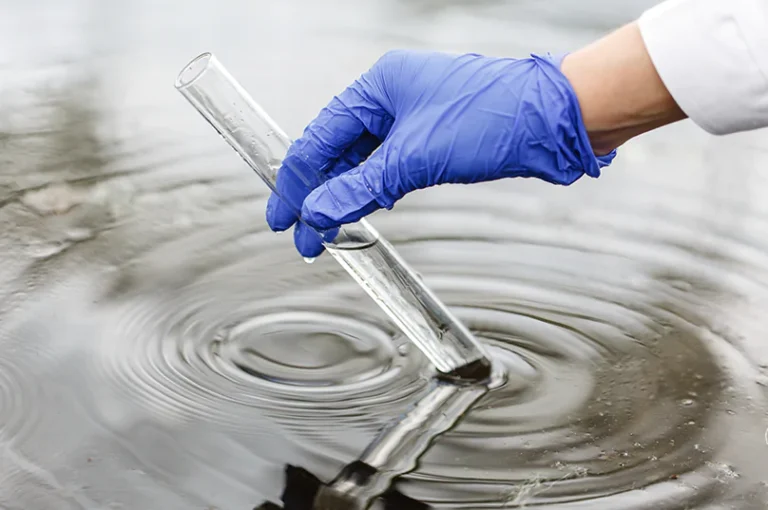
A water test can provide a much clearer picture. It may measure characteristics such as hardness, pH, iron, manganese, and other water-quality indicators. For homes supplied by private wells, testing becomes even more important because groundwater conditions can vary from property to property.
Once you know what’s happening, the treatment conversation becomes much simpler. Instead of asking, “Which filter should I buy?” you’re asking a more useful question: “What treatment does this water actually need?”
That small change in thinking can save money and frustration.
What Does Water Conditioning Actually Mean?
The term water conditioning is sometimes used broadly, and that can make things confusing. In general conversation, it may refer to equipment or processes intended to improve particular characteristics of household water.
For example, conditioning might involve reducing hardness, managing scale, improving taste, or addressing other nuisance characteristics. The exact approach depends on the water analysis and the desired outcome.
Hard water is a good example. Calcium and magnesium can leave mineral deposits on fixtures, make soap less effective, and contribute to scale inside plumbing and water-using appliances.
A treatment system designed for hardness can make a noticeable difference, but it shouldn’t automatically be expected to remove every other substance in the water. Different problems call for different technologies.
Choosing the Right Water Filter
It’s easy to assume that all filters work more or less the same way. They don’t.
Some water filters are designed primarily to capture sediment and particles. Others use activated carbon to improve taste and odor or reduce certain substances. More advanced systems may use membranes or specialized media for specific treatment goals.
The best option depends on the water and where you want treatment to occur.
A point-of-use filter can be a sensible choice when drinking and cooking water are the main concerns. If the problem affects showers, laundry, fixtures, and appliances throughout the house, whole-home treatment may be more appropriate.
There’s no prize for owning the most complicated system. The goal is effective treatment that fits your needs.
Well Water Requires a Different Mindset
Owning a private well gives you control over your water source, but it also puts more responsibility on the homeowner.
Unlike municipal water, well water isn’t treated by a public utility before it reaches your property. The condition of groundwater can be influenced by local geology, rainfall, nearby land use, well construction, and other factors.
That makes well water treatments especially dependent on testing. One well may have significant hardness. Another might have iron staining or sediment. A different property could experience odor or microbiological concerns.
There isn’t one universal solution that works for every private well.
A well-focused treatment plan may include sediment filtration, softening, carbon filtration, iron reduction, disinfection, or other technologies. The correct combination should be based on the water rather than a generic package.
Sediment Is More Than an Eyesore
Sediment can seem like a minor annoyance, especially when it’s only occasionally visible. But persistent particles can cause bigger headaches.
Sediment may clog faucet aerators, shorten the life of filters, affect valves, and interfere with downstream treatment equipment. In some cases, it can also contribute to cloudy or unpleasant-looking water.
A sediment filter placed early in the treatment process can help protect other equipment. But filtration should still be sized appropriately. A filter that is too restrictive can clog rapidly and reduce water pressure.
Again, balance matters.
Don’t Forget Household Flow
Water treatment equipment needs to work with the home’s actual water demand.
A system that performs well under low demand may struggle when several fixtures operate at once. Think about a morning when someone is showering, the dishwasher is running, and another family member turns on the kitchen faucet. That’s when an undersized system can become obvious.
When selecting treatment, consider the number of bathrooms, household size, peak usage, incoming pressure, and available space.
Oversizing isn’t necessarily better either. Larger equipment can increase purchase and maintenance costs without providing a meaningful benefit.
The right size is the one that comfortably handles the household.
Installation Deserves Attention
Even high-quality treatment equipment can underperform when installation isn’t handled properly.
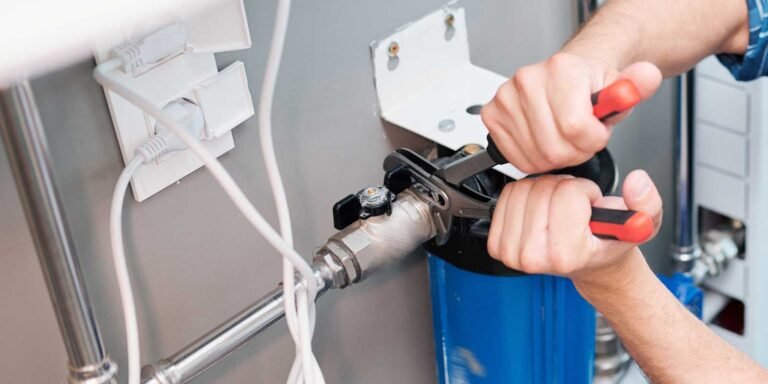
Connections need to be secure, flow direction needs to be correct, and components should remain accessible. Equipment that requires drainage or electrical connections needs those elements configured appropriately as well.
Maintenance should be considered during installation, not afterward. If a filter housing is wedged into an impossible corner, changing the filter will become an unpleasant chore. If shutoff valves are difficult to reach, a simple repair can take longer than necessary.
Good installation is partly about performance and partly about making future service easier.
Maintenance Keeps Treatment Working
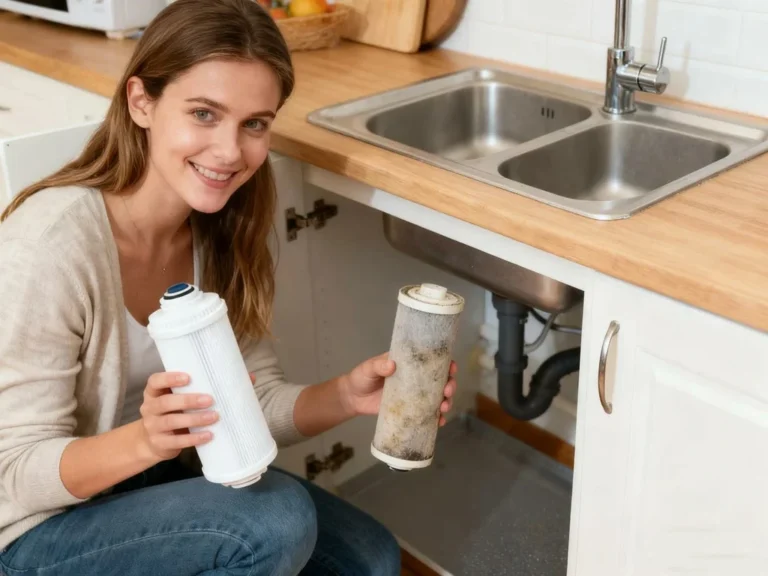
Filters don’t last forever. Media becomes exhausted, membranes require replacement, and mechanical components can wear over time.
A simple maintenance calendar can prevent many avoidable problems. Record filter changes, follow manufacturer recommendations, and pay attention when water taste, odor, pressure, or appearance changes.
For well owners, periodic water testing is particularly worthwhile. A treatment system designed several years ago may no longer match changing water conditions.
And if the water suddenly changes dramatically, don’t assume the filter is automatically the culprit. Investigate the source as well.
Avoid Buying More Than You Need
Water treatment marketing can sometimes make it seem as though every home needs a giant collection of filters, tanks, and accessories.
That’s not always true.
If testing identifies one specific issue, address that issue first. Additional treatment can be added when there’s a legitimate reason for it.
Every piece of equipment should have a clear purpose. Otherwise, you’re paying for extra maintenance without necessarily getting better water.
A straightforward system that’s properly designed is often more useful than an elaborate system that nobody understands.
The Best Water Treatment Is the One That Fits
Improving household water isn’t about chasing the most advanced technology available. It’s about matching the solution to the problem.
Start with testing. Understand the water source. Consider whether treatment is needed at one faucet or throughout the property. Think about household demand, installation space, maintenance, and long-term costs.
Then choose accordingly.
The result should be water that feels easier to live with—less scale, fewer unpleasant tastes or odors, cleaner fixtures, or simply greater confidence in what’s coming from the tap.
Good water treatment doesn’t need to announce itself every day. In fact, the best systems often fade into the background. You turn on the faucet, fill a glass, wash your hands, take a shower, and get on with your day.
That’s the real measure of success: not a complicated setup, but water that quietly works better for your home.