There’s a funny thing about water: the clearer it looks, the easier it is to assume everything about it must be fine. Pour it into a glass, hold it up to the light, and if you can’t see anything floating around, most of us move on.
But water quality is more complicated than appearance. Dissolved minerals, sediment, naturally occurring substances, and treatment-related compounds can all influence the water that eventually reaches your faucet. Some affect taste and odor. Others can contribute to scale or leave deposits on fixtures and appliances.
That doesn’t mean every home has a serious water-quality problem. Far from it. It simply means that when something seems different, a little investigation is usually more useful than guesswork.
What Does “Pure” Water Really Mean?
The word “pure” sounds reassuring, but it’s not especially precise when you’re talking about household water.
Water can contain naturally occurring minerals and still be perfectly appropriate for its intended use. In fact, trying to remove every dissolved substance isn’t necessarily the goal. The right treatment depends on the source of the water and what you’re trying to improve.
For some homeowners, pure water means better taste and fewer odors. For others, it means reducing a particular substance identified through testing. The important thing is to define the goal before choosing equipment.
That small shift in thinking can prevent you from spending money on treatment you don’t actually need.
Start With What’s Coming Into the House
Before choosing a filtration system, look at the water source.
Municipal water typically goes through centralized treatment, but that doesn’t mean household water is identical everywhere. Plumbing materials, building age, local conditions, and other factors can influence what comes out of the tap.
Private wells require a different kind of attention. Well water can change with groundwater conditions, heavy rainfall, flooding, nearby land activity, and well equipment.
If you’ve noticed a new smell, taste, color, or sediment, take the change seriously enough to investigate it. It may be harmless, but you won’t know until you have useful information.
Water Analysis Turns Guesswork Into Something Concrete
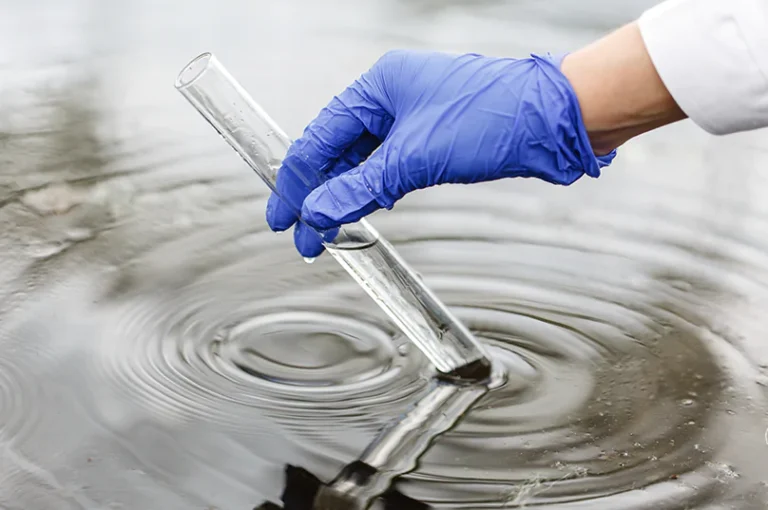
A good water analysis provides a snapshot of the characteristics that matter for your treatment decisions.
Depending on the test, you may learn about hardness, pH, iron, manganese, dissolved substances, or other water-quality indicators. More comprehensive laboratory testing may be appropriate when specific health or contamination concerns exist.
Testing is especially valuable before investing in equipment. Imagine buying a water softener because someone told you that your water is “hard,” only to discover that hardness wasn’t the issue causing the taste you disliked.
That’s an expensive detour.
Testing doesn’t always lead to buying a treatment system, either. Sometimes the results reassure you that the water is already suitable for your needs. That’s useful information too.
Why One Filter Isn’t Always Enough
Water treatment equipment tends to work in stages because different problems require different approaches.
A sediment filter can capture physical particles. Activated carbon can reduce certain tastes and odors. A softener addresses hardness. Reverse osmosis can reduce many dissolved substances.
This is why multi-stage systems can be useful. Each component performs a particular role rather than asking one filter to do everything.
But more stages don’t automatically mean better water. A system should be designed around actual water conditions. Adding unnecessary components can increase cost and maintenance without providing a meaningful improvement.
Understanding the Multi-Stage Reverse Osmosis Process
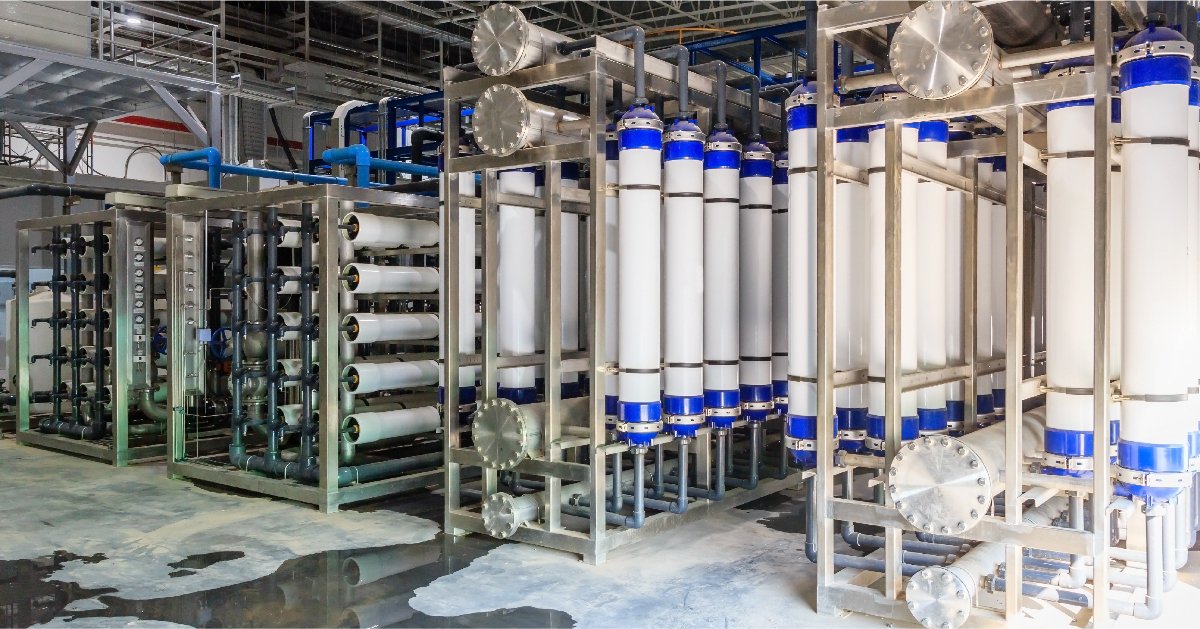
A typical multi-stage reverse osmosis process may begin with pre-filtration.
The first stage can capture sediment and protect later components. Another stage may use activated carbon to reduce chlorine and certain organic compounds. The reverse osmosis membrane then performs the primary separation of many dissolved substances.
Some systems include an additional post-filter before water reaches the faucet. Others may add specialized stages depending on the water source and treatment goals.
The exact configuration matters less than whether each stage has a reason to be there. A well-designed system should be understandable. You should know what each filter does, why it’s included, and when it needs replacement.
Water Pressure Can Make a Difference
Reverse osmosis isn’t simply a passive filter.
Water has to move through the membrane under pressure, and insufficient pressure can affect production and performance. If your home already has low water pressure, that’s something to discuss before installation.
Some systems include pumps or other design features to compensate for pressure limitations. Others may not be appropriate for a particular plumbing setup.
Don’t assume that every under-sink reverse osmosis unit will perform identically in every home. Water conditions and installation details matter.
Efficiency Is Worth Considering
Reverse osmosis can produce wastewater as part of its normal operation.
The amount varies considerably depending on system design, water pressure, membrane condition, and other factors. Modern systems can be designed for improved efficiency, but homeowners should still ask questions before purchasing.
How much treated water does the system produce? How much water is sent to drain? How often do filters need changing?
These aren’t glamorous questions, but they’re practical ones. Over several years, operating characteristics can matter just as much as the original purchase price.
Maintenance Is Where Good Systems Stay Good
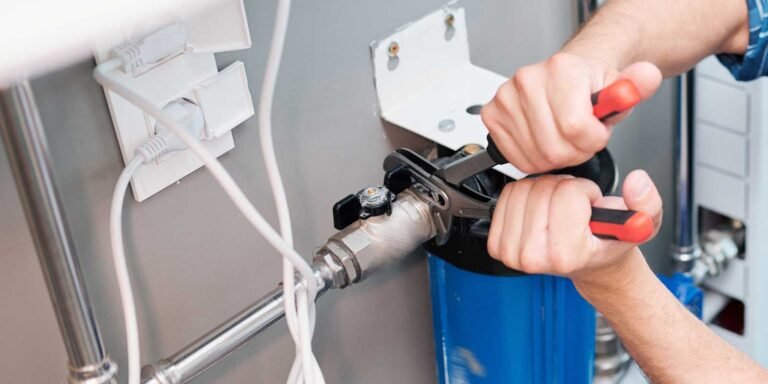
Even excellent equipment needs maintenance.
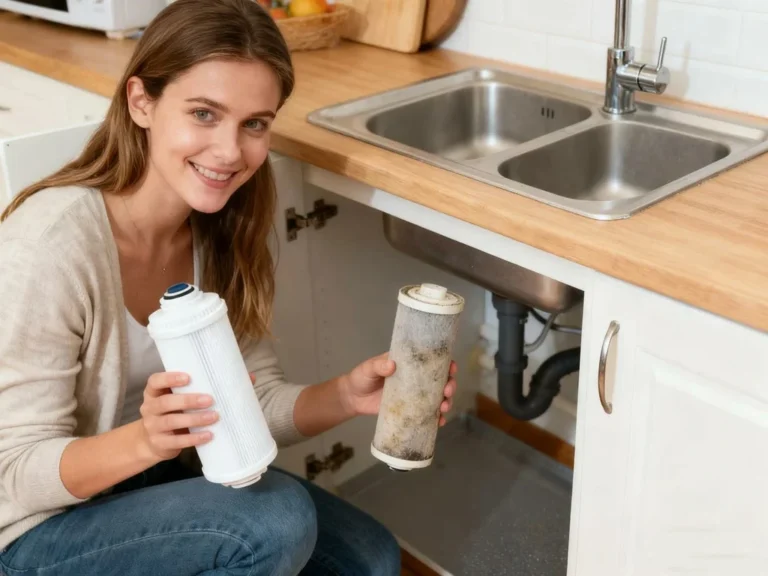
Pre-filters eventually become loaded with sediment. Carbon filters have service limits. Reverse osmosis membranes can require replacement as their performance declines.
A common mistake is waiting until the water tastes noticeably worse before doing anything. By then, the system may already have been operating below its expected performance for some time.
Keep a record of filter changes and follow the manufacturer’s service recommendations. If water production slows or the system begins behaving differently, investigate early.
Consider the Rest of the Plumbing
A drinking-water system can’t correct every issue that occurs inside a home.
If the water tastes fine at the treatment faucet but has a different smell at another fixture, the issue may involve the plumbing rather than the incoming supply.
Likewise, if you’re dealing with scale throughout the house, an under-sink reverse osmosis system isn’t designed to solve that whole-home hardness problem. A separate treatment approach may be needed.
Understanding where the problem occurs helps narrow down the cause.
Don’t Chase an Impossible Standard
There is a temptation in water treatment to keep adding filters in pursuit of “perfect” water.
But perfect isn’t necessarily the goal.
The goal is water that’s appropriate for drinking, cooking, bathing, cleaning, and the needs of your household. Treatment should address meaningful concerns while remaining practical to maintain.
A simple system that is correctly selected and regularly maintained can be much more useful than an elaborate setup that nobody understands or services.
The Kitchen Faucet Is Only the Beginning
Better drinking water starts with paying attention.
If something tastes strange, smells unusual, or changes unexpectedly, investigate it. Test the water when appropriate. Understand your treatment options. Ask what a system is designed to remove and what it isn’t designed to remove.
Most importantly, think about the long-term picture. Filters cost money to replace. Membranes have service lives. Systems occupy space and require maintenance.
A little planning before installation can save a lot of inconvenience later.
Make the Water Fit the Household
Water treatment isn’t really about owning the most advanced equipment. It’s about making a sensible match between your water and your needs.
Maybe testing shows that a simple carbon filter is enough. Perhaps hardness requires softening. Maybe reverse osmosis makes sense for drinking and cooking water. Or perhaps the water is already fine and no additional treatment is necessary.
Any of those outcomes can be the right one.
The smartest approach is to start with facts rather than assumptions. Once you know what is in your water and what you want to improve, the path forward becomes much clearer.
And when the work is done properly, the result is wonderfully ordinary: you turn on the kitchen faucet, fill a glass, take a drink, and don’t have to think twice about it.