Most fintech companies burn millions on advertising to acquire customers. Zerodha did almost the opposite — and still became India’s largest stock brokerage. This Zerodha success story case study is one I bring up constantly when talking to founders about sustainable, profitable growth.
What makes it interesting isn’t just the numbers. It’s how deliberately different their approach was compared to nearly every other player in the space.
Background: How Zerodha Started
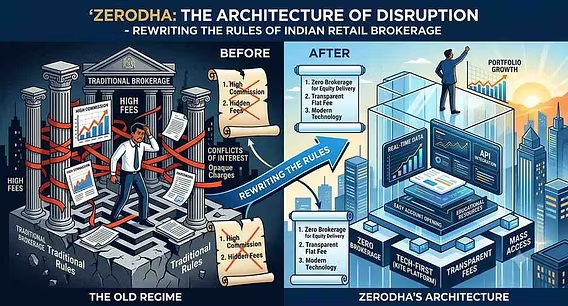
Founded in 2010 by Nithin Kamath and his brother Nikhil, Zerodha started with a simple but disruptive idea — flat-fee brokerage instead of the traditional percentage-based commission model most brokers used at the time. This alone made trading significantly cheaper for retail investors, especially high-frequency traders.
Key Strategies Behind Zerodha’s Growth
- Bootstrapped, no external funding — Full control over decisions and profitability
- Zero-ad marketing — Relied almost entirely on word of mouth and content
- Educational content (Varsity) — Built trust by teaching, not just selling
- Simple, transparent pricing — Flat ₹20 per trade model, easy to understand
- Strong tech infrastructure — Built proprietary trading platforms in-house
[link to related guide about entrepreneur mindset development here]
Why Zerodha’s Bootstrapped Approach Worked
Here’s a quick answer: Zerodha’s decision to stay bootstrapped meant no pressure from investors to prioritize rapid, unsustainable growth over profitability — this let them build genuinely useful products and maintain lower fees, which became their core competitive advantage over funded competitors.
What Other Businesses Can Learn From Zerodha
I’ve noticed a lot of founders assume you need heavy funding and aggressive marketing to scale fast. Zerodha’s story pushes back against that assumption pretty firmly. They proved that solving a genuine customer problem — high brokerage fees — combined with education-first content, can build sustainable growth without a single rupee spent on traditional advertising.
Zerodha’s Numbers That Matter
By the early 2020s, Zerodha had grown to become India’s largest stockbroker by active client base, reportedly crossing over a crore (10 million) registered users, while remaining profitable and debt-free throughout — a rarity in the fintech space where most competitors relied heavily on external funding.
Challenges Zerodha Faced Along the Way
It wasn’t all smooth. Zerodha faced regulatory changes, increased competition from newer discount brokers, and periods of market volatility that directly affected trading volumes and revenue. Their response was largely to keep improving their product and educational content rather than reacting with aggressive discounting or ad spend.
FAQ
Q1. How did Zerodha grow without spending on advertising? Primarily through word of mouth, educational content via Varsity, and a genuinely disruptive flat-fee pricing model.
Q2. Is Zerodha a funded startup? No, Zerodha has remained completely bootstrapped since its founding in 2010, without any external venture funding.
Q3. What is Zerodha Varsity? It’s Zerodha’s free educational platform teaching stock market concepts, which helped build trust and brand credibility among users.
Q4. What makes Zerodha’s business model different from competitors? Their flat-fee pricing and focus on building in-house technology rather than relying on third-party platforms set them apart early on.
Q5. Can small businesses apply lessons from Zerodha’s growth? Yes, particularly the focus on solving a genuine customer pain point and building trust through valuable content rather than heavy advertising.
Conclusion
The Zerodha success story case study shows that disruptive pricing, genuine customer education, and staying bootstrapped can build a market leader without traditional marketing spend. For founders in 2026 looking at this case, the real takeaway isn’t to copy Zerodha exactly, but to identify what genuine problem your customers face and solve it more transparently than your competitors do.
Image alt text suggestions:
- “zerodha app trading platform interface”
- “stock market growth chart case study”
- “fintech startup success story infographic”