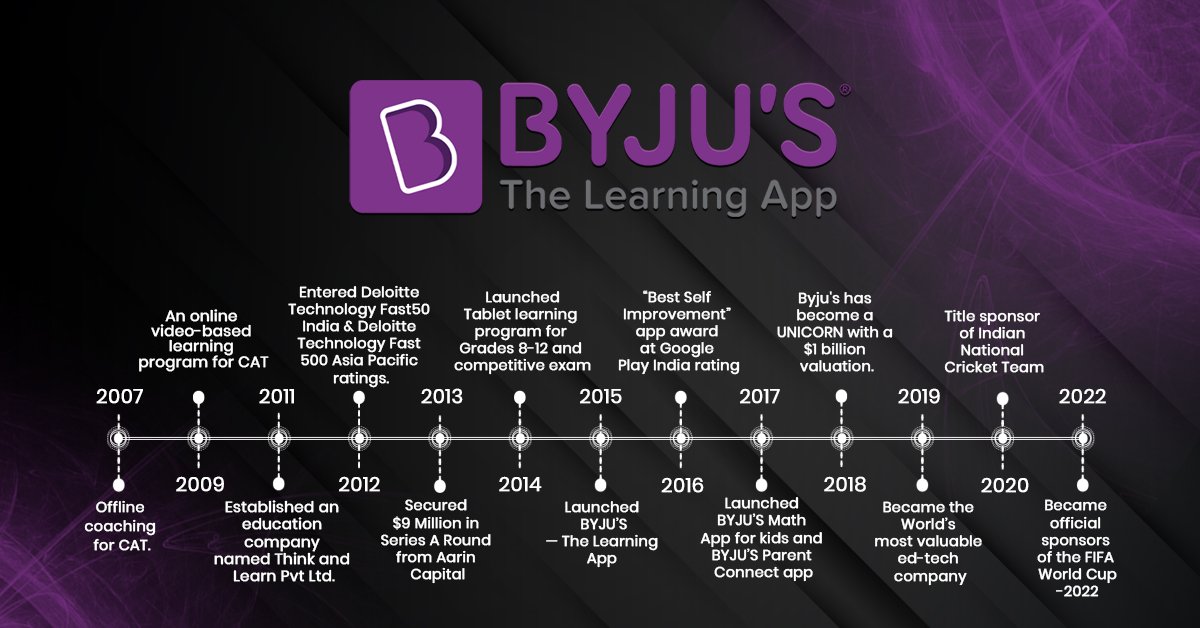
Few Indian startups have seen a rise and fall as dramatic as Byju’s. At its peak, it was valued at over $22 billion — one of India’s most valuable startups ever. This Byju’s case study is a genuinely important one for founders, because it shows how quickly things can unravel even after massive success.
I find this case particularly useful to discuss because it isn’t just about failure — it’s about what happens when growth outpaces sustainable business fundamentals.
Byju’s Rapid Rise
Founded by Byju Raveendran in 2011, Byju’s grew rapidly through aggressive marketing, celebrity endorsements, and a subscription-based edtech model that gained massive traction during the pandemic when schools shifted online. By 2022, it had become India’s most valuable startup, backed by major global investors.
Key Factors Behind Byju’s Initial Success
- Pandemic-driven demand — Online learning surged when schools closed
- Aggressive marketing spend — Heavy celebrity endorsements and ad campaigns
- Rapid acquisitions — Bought multiple companies to expand quickly (WhiteHat Jr, Aakash, and others)
- Strong investor backing — Raised billions in funding rounds
- Freemium content model — Free initial content that hooked users into paid subscriptions
[link to related guide about corporate culture building here]
What Caused Byju’s Downfall
Here’s a direct answer: Byju’s downfall stemmed from a combination of aggressive, debt-fueled acquisitions, questionable sales practices reported by former employees, delayed financial statements raising governance concerns, and a sharp valuation markdown once pandemic-driven demand faded and investor sentiment shifted.
The Governance and Financial Issues
Byju’s faced significant scrutiny over delayed financial filings, with its FY21 results submitted over a year late. This raised red flags among investors and auditors. Reports of aggressive, sometimes misleading sales tactics targeting parents also damaged the company’s reputation significantly during this period.
Lessons Founders Can Learn From Byju’s Case
I’ve noticed founders often admire Byju’s early aggressive growth without examining what came after. The real lesson here isn’t about avoiding ambition — it’s about not letting growth outrun financial discipline and ethical sales practices. Scaling fast without solid unit economics and transparent governance eventually catches up, no matter how impressive the growth numbers look initially.
Where Things Stand Now
By 2023-2024, Byju’s valuation had been marked down dramatically by several investors, employee layoffs had occurred in multiple rounds, and the company faced ongoing legal and financial disputes, including with lenders over loan defaults. It remains a cautionary example actively discussed in Indian startup circles.
FAQ
Q1. Why did Byju’s valuation crash so dramatically? A combination of governance concerns, delayed financials, declining post-pandemic demand, and investor confidence loss led to sharp valuation markdowns.
Q2. What companies did Byju’s acquire? Byju’s acquired several companies including WhiteHat Jr, Aakash Educational Services, and Great Learning, among others, during its rapid expansion phase.
Q3. Is Byju’s still operating in 2026? Byju’s has faced significant restructuring and legal challenges; checking recent news is recommended for its current operational status.
Q4. What were the main criticisms of Byju’s sales practices? Former employees and parents reported aggressive, sometimes misleading sales tactics used to pressure enrollment in paid courses.
Q5. What can startups learn from Byju’s case study? That sustainable growth requires financial discipline and ethical practices, not just aggressive marketing and rapid expansion funded by debt.
Conclusion
The Byju’s case study serves as an important reminder that rapid growth and high valuations don’t guarantee long-term success. For founders and business students studying this in 2026, the key takeaway is balancing ambition with governance, transparency, and sustainable unit economics — growth without these fundamentals tends to be fragile, no matter how impressive it looks on paper.
Image alt text suggestions:
- “byjus edtech app case study analysis”
- “startup valuation growth decline chart”
- “indian startup funding case study illustration